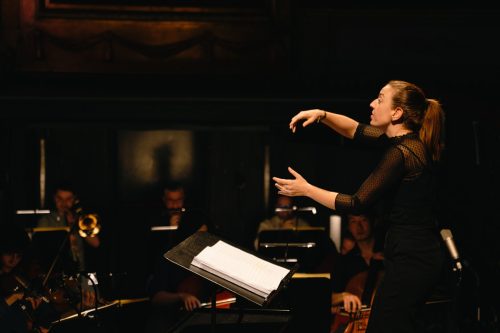
Lara Diloy: The art of conducting through balance and excellence
The career of Madrid-born conductor Lara Diloy continues to reach significant milestones in the national media. On November 12th, the prestigious cultural supplement La Lectura (El Mundo) featured an in-depth report on her figure, analyzing the keys that have made her one of the most solid references in orchestral conducting today.
An in-depth interview on orchestral conducting
Under the headline “In balance lies the answer,” the interview explores not only Diloy’s technical achievements but also her humanistic philosophy on the podium. In a thoughtful conversation, the conductor reflects on the responsibility of leading major ensembles and the need to find a balance between the rigour of the score and the collective energy of the orchestra.
“Classical music is food for the soul. It has a great capacity for transformation,” states Lara Diloy during the encounter. This vision reaffirms her commitment to cultural outreach and her active role in renewing the Spanish lyric and symphonic scene.
A benchmark for a new generation of conductors
The article highlights Lara Diloy’s appearances at highly prestigious institutions. Her presence in the pit of the Teatro de la Zarzuela, her work with the RTVE Symphony Orchestra, and her recent success with La Traviata in Almería are examples of a career built on excellence and technical reliability.
The press emphasizes her ability to manage the complexity of opera productions, noting her precision and artistic sensitivity. Featuring in a national outlet like El Mundo not only celebrates her past successes but also points to her promising international projection.
The balance between tradition and modernity
The interview also addresses the importance of teamwork within the orchestra, a hallmark of her working method. For Diloy, modern conducting requires active listening and flexibility to allow musicians to reach their full potential.
This media coverage in La Lectura consolidates Lara Diloy as one of the most influential batons of her generation, positioning her as a key figure in understanding the evolution of classical music in Spain today.